NUAN CLINIC
Where Taste and Negative Space Linger
NUAN CLINIC is conceived as an intimate retreat, evoking the feeling of stepping into a collector’s private world—a space shaped by personal taste, thoughtful curation, and a quiet sense of refinement.
Upon entering, the gaze is drawn along a diagonally angled wall, gently guiding movement through the interior. A full-height mirrored surface dissolves the boundaries of the space, extending its visual depth and creating a subtle sense of spatial continuity.
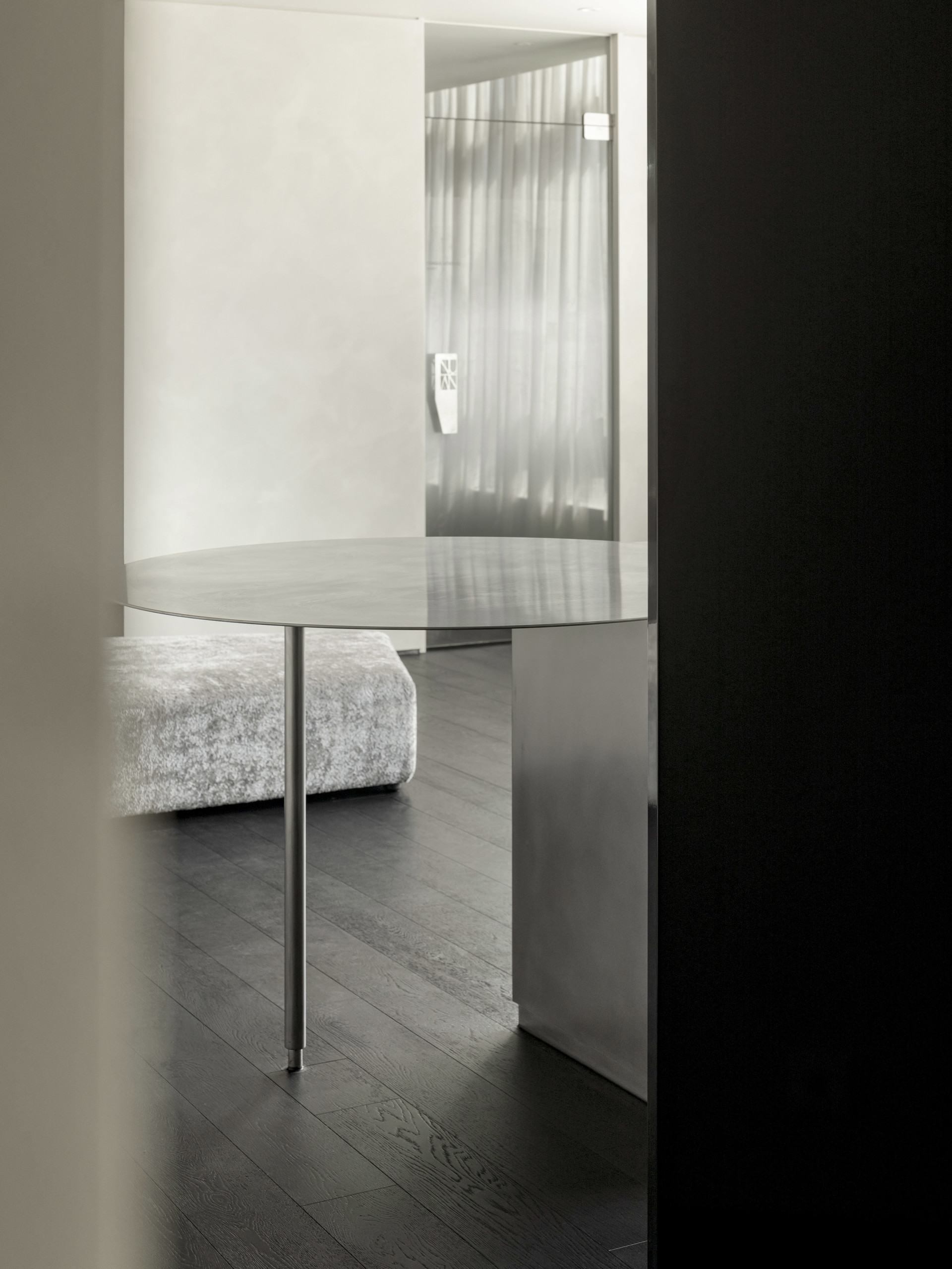
At the end of this reflective passage, the lounge reveals itself. Deep black-stained oak flooring sets a striking contrast against crisp white walls, while glossy black furnishings, a sculptural column, and a minimalist metal reception desk bring a sense of understated balance to the composition.
Each treatment room unfolds as a distinct spatial experience. One is defined by brown carpeting, subdued lighting, and glossy black walls interspersed with mirrors that envelop three sides of the room, creating an intimate atmosphere of depth and immersion. Another takes a more seamless approach, with continuous wall and floor tiling beneath the soft, evenly diffused glow of a Barrisol ceiling.
Through deliberate material choices and a considered interplay of color, light, and reflection, NUAN CLINIC moves beyond the conventional language of clinical interiors. Each space possesses its own character, yet together they form a cohesive narrative—one that lingers in the memory long after the visit has ended.